Why Smaller Sized Senior Care Residences Master Memory and Dementia Care
Business Name: BeeHive Homes of Arrowhead Assisted Living
Address: 17202 N 69th Ave, Glendale, AZ 85308
Phone: (602) 717-1864
BeeHive Homes of Arrowhead Assisted Living
BeeHive Homes of Arrowhead Assisted Living care is ideal for those who value their independence but require help with some of the activities of daily living. Residents enjoy 24-hour support, private bedrooms with baths, medication monitoring, home-cooked meals, housekeeping and laundry services, social activities and outings, and daily physical and mental exercise opportunities. We offer full memory care services that accommodate the growing number of seniors affected by memory loss and dementia. Beehive Homes offers respite (short-term) care for your loved one should the need arise. At the BeeHive Homes of Arrowhead Assisted Living, we strive to provide the best care for our residents while maintaining their dignity and respect.
17202 N 69th Ave, Glendale, AZ 85308
Business Hours
Families generally start taking a look at senior care options after a crisis: a fall, wandering at night, a fire on the range, or a neighbor calling because Mom is on the deck at 3 a.m. In winter season. They search for assisted living, memory care, respite care, anything that sounds like help. What they typically discover are big, hotel-like structures with remarkable lobbies, long corridors, and activity calendars that appear like summer season camp.
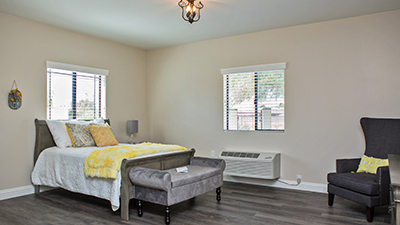
Then, nearly as an afterthought, someone discusses a small 6 to ten bed home in a neighborhood close by. No chandelier. No marble reception desk. Simply a routine home with a ramp and a doorbell, described as a "residential care home" or "board and care."
After twenty years working with households and personnel in both big neighborhoods and small homes, I have seen the very same pattern repeat. For individuals living with dementia, the smaller setting typically supports better daily life, less crises, and calmer families. It is not magic, and it is not perfect. But the scale of the setting shapes whatever from behavior to nutrition.
This is not about offering one design over another. There are outstanding big neighborhoods and poor small homes, and vice versa. Instead, it is about understanding why small senior care homes, when they are well run, are particularly matched to memory and dementia care.
Why size matters more for dementia than for other seniors
Older adults who are still psychologically sharp can typically adjust to a large assisted living neighborhood. They may take pleasure in the busy lobby, the range of activities, and the restaurant-style dining-room. People coping with dementia experience those exact same functions really differently.
Dementia strips away cognitive reserve and strength. Excessive stimulation is not just strenuous, it can activate agitation, confusion, or withdrawal. A sprawling building becomes a maze. Multiple personnel groups, turning schedules, and continuous new faces can feel like residing in a hotel where the staff changes every couple of days.
A smaller sized senior care home naturally minimizes that cognitive load. Homeowners see the exact same handful of people every day, both personnel and next-door neighbors. They move within familiar, repeatable courses: bedroom to kitchen, kitchen to living space, living room to garden. Their world shrinks, however in such a way that feels manageable, not institutional.
When families tell me, "Mom is a lot calmer given that she relocated to the small home," the change normally shows 3 aspects that are hard to duplicate in a big structure:
- Fewer individuals and less noise.
- Shorter distances and easier layouts.
- More constant personnel who know each resident deeply.
Those may seem like little information. In dementia care, they are the environment.
The sensory experience of a smaller sized home
You discover a lot about a memory care setting with your eyes closed. Households visiting a location often look at the lobby, the furniture, or the schedule on the wall. I focus on sound, odor, and rhythm.
In a smaller sized home, the sensory environment tends to be closer to normal life. You hear someone slicing veggies, a cleaning machine running, a radio with soft music, possibly a tv in the background. You smell coffee, soup, or toast. Corridors are brief or nonexistent. The dining area is a table that seats everybody.
For a resident with dementia, this lines up with decades of regimen. Home has constantly seemed like someone in the kitchen. Mealtime has constantly been around a table, not at a four-top in a space that seats 50 people with clattering dishes and shouted conversations. The brain does not require to re-learn how to translate that environment. It currently understands it.
Large memory care systems try to soften the institutional feel, and many do an excellent job. However the sheer scale works against them. Thirty citizens mean thirty sets of visitors, thirty tvs, thirty bathroom doors opening and closing. Even with excellent style, there is a hidden level of stimulation that never completely disappears.
People with dementia are extremely conscious this background noise. I as soon as worked with a gentleman who became significantly aggressive at 4 p.m. Every day in a 40-bed memory care unit. Staff presumed it was "sundowning." When we sat with him in the common area and just listened, we discovered a pattern. At that time, staff from the next shift collected at the nurses' station, families got here to visit, and supper preparations started. The space went from moderate to disorderly in about ten minutes. We trialed moving him to a quieter corner and shifting his routine slightly so he was in his space during that transition. His "sundowning" almost disappeared.
In a little home, those environmental spikes are less dramatic. Life still has hectic minutes, but the scale softens the edges. For memory and dementia care, that matters immensely.
Relationships, not rotations
Staffing structure is where little homes frequently shine one of the most. In large assisted living and memory care structures, staff work in shifts, often assigned to dozens of residents per group. Overnight, that ratio sometimes becomes one caretaker for fifteen to twenty residents, or more. With turnover, company staff, and schedule changes, a single resident might see lots of various caregivers in a month.
In a six to twelve resident home, the photo changes. Staff still work shifts, but the number of individuals included is much smaller sized. A resident might communicate regularly with 6 to 8 caregivers in total, often including the manager or owner. Over time, that group develops a very comprehensive understanding of how each person eats, moves, sleeps, and reacts.
Continuity is not almost psychological convenience, though that matters. It has real clinical effect. Early modifications in dementia symptoms are subtle. Hunger dips for several days. A normally talkative resident grows quiet. Somebody who has actually constantly walked unassisted starts holding onto furnishings. Personnel who really know each resident catch these shifts faster than anyone.
I remember a little home where a caregiver pulled me aside and said, "Mrs. K has actually been folding towels for many years. She constantly completes the stack. Yesterday she left half and wandered away two times. Something is off." That prompted a medical evaluation. We found a urinary tract infection early, before it intensified into delirium, falls, or a hospitalization. In a bigger setting, where personnel serve a lot more homeowners and tasks are tightly scheduled, that type of pattern recognition is much harder.
It also affects how responsive the setting can be to psychological requirements. A resident who wakes afraid in the evening may require ten minutes of peace of mind and a cup of tea. In a little home with four homeowners and a single caregiver, that discussion is realistic. In a memory care system where the over night caretaker is responsible for twenty locals and three are currently calling out, it is frequently impossible, no matter how dedicated the staff.
Everyday life feels more like life, not a program
Many big senior care neighborhoods put substantial effort into activity programs. There are calendars, style days, performers, and group classes. Some locals take pleasure in these, and families like to see a complete schedule published. The obstacle is that dementia typically reduces an individual's ability to initiate, strategy, and sustain attention. Being accompanied to a structured event in a room down the hall can feel like being processed through a program rather than living a day.
Smaller homes typically have simpler calendars and rely more on the rhythms of household life. Folding laundry, snapping beans, setting the table, or watering plants end up being "activities." They are smaller tasks, however they align with how life has actually always worked. The person with dementia is not a passive recipient of entertainment. They participate in the household.
This kind of engagement use procedural memory, which is frequently maintained longer than short-term memory. A woman who can not remember what she had for breakfast might still keep in mind, with her hands, how to clean a table or sort socks. Providing her that role is not busywork. It supports dignity and identity.
I have seen men who spent their whole professions in trades completely withdraw in a large assisted living structure, then become animated once again in a small home when given safe, supervised "tasks" like examining the fence gate, carrying light parcels in from the front door, or helping set up chairs before lunch. The setting made those roles possible since whatever was better, simpler, and less constrained by institutional rules.
Safety, roaming, and exits
Families picking dementia care often focus greatly on security. They think of locked doors, call bells, alarms, and camera. Those features do matter, specifically when someone is at risk of roaming into traffic or leaving the structure unsupervised.
Large memory care units generally react with layers of security: coded doors, fenced courtyards, and in some cases numerous internal doors in between a resident's space and the outside. This can lower risk, however it likewise increases the sensation of being trapped. For some homeowners, that sets off more agitation and more attempts to leave.
Smaller residential homes frequently utilize a various balance. The structure itself is compact, so personnel can see or hear nearly whatever. Doors may still have alarms or keypads, however there are less locations to conceal, less blind corners, and typically a single primary exit. Personnel are not half a building away when somebody attempts to open a door.
The physical design likewise enables much safer "wander paths." A resident can walk from living space to assisted living kitchen area to outdoor patio and back in a basic loop, supervised by a caregiver who is likewise making lunch or tidying. That type of movement is healthy and reassuring. Continuously rerouting an individual to "take a seat and stay here" due to the fact that the environment can not safely accommodate strolling typically intensifies behaviors.
Of course, not every small home is well developed. I have seen narrow hallways with clutter, steep steps, and back entrances that cause unfenced yards. Regulation differs by state or province, and not all homes meet the exact same standards. Families require to visit and observe design and safety measures, not presume that little instantly means safe. However when succeeded, the small footprint offers both security and freedom of motion in ways large buildings battle to match.
Medical care, crises, and greater acuity
There is a fair concern households raise about little homes: what takes place when care needs boost? Big assisted living or memory care neighborhoods typically have on-site nurses, checking out doctors, and treatment services. They may promote "aging in place" with the capability to handle injections, feeding tubes, or two-person transfers.
Smaller homes differ commonly. Some focus mostly on lower to moderate requirements. Others are licensed and staffed to manage complex dementia care and even hospice-level support. I have actually worked with six-bed homes that successfully supported locals through the last months of life without hospitalization, utilizing hospice teams and strong caretaker training.
The key is to look beyond the label. "Assisted living" and "memory care" are marketing terms as much as legal classifications, and the specific assisted living license or residential care license in your area identifies what is permitted. Families ought to ask blunt questions:
What is the maximum level of care you can provide?
Can you handle transfers for someone who can not stand? Do you have nurses on personnel or on call? How often do citizens go to the healthcare facility, and who decides?Smaller homes seldom have physicians on site, however many develop close relationships with local medical groups, nurse practitioners, or home health firms. Those collaborations can be active. I have actually seen a nurse professional make a same-day visit to a little home to examine a sudden habits change, something that would have required an ER journey in another setting.
At the very same time, there are limitations. If somebody requires continuous monitoring equipment, frequent IV medications, or extremely technical care, a small residential setting may not be proper. The strength of small homes is relational, ecological assistance, and constant observation, not state-of-the-art interventions.
Where smaller homes shine, and where bigger neighborhoods still help
It helps to be candid about the trade-offs. There is no best design, only much better or even worse matches for a particular individual at a specific point in their dementia journey.
Here are circumstances where, in my experience, a little senior care home is especially effective:
- Middle-stage dementia with significant amnesia, confusion, or roaming risk, however without extremely complicated medical needs.
- Individuals who become easily overwhelmed, distressed, or agitated in loud or crowded environments.
- People whose sense of identity is closely tied to home routines, such as cooking, gardening, or "assisting."
- Families who value frequent, direct communication with caretakers and want to know who is with their loved one day to day.
- Residents who have actually already struggled in a big assisted living or memory care setting due to behavioral obstacles or repeated falls in long hallways.
Larger assisted living or memory care communities, on the other hand, can be a much better fit when somebody is still socially oriented, delights in range, and can browse larger areas with minimal distress. They may also be more suitable when a resident has numerous complex medical conditions that require on-site scientific oversight, or when a family expects a requirement to shift between independent living, assisted living, and skilled nursing within one campus.
Cost can also press choices. In some regions, little homes are more cost effective than big neighborhoods. In others, shop residential homes charge a premium. Each model has its staffing and overhead structures, and pricing reflects that.
What to look for when visiting a little memory care home
Families frequently feel unprepared when they enter a little senior care home for the very first time. It does not look like the pamphlets for assisted living. To keep visits grounded, a basic checklist helps.
When you tour, pay particular attention to:
- Atmosphere: Do homeowners look relaxed, clean, and engaged in something, even if it is basic? How does the home feel in your gut after ten minutes?
- Staff interaction: Do personnel talk to residents respectfully, at eye level, utilizing names? Listen for tone as much as words.
- Cleanliness and security: Is the home tidy without giving off extreme chemicals or urine? Are floorings clear, bathrooms accessible, and exits protected yet not prison-like?
- Daily life: Ask how a typical day unfolds, from waking to bedtime. Does it sound versatile, or rigid and staff-centered?
- Communication: How will the home keep you updated? Who calls you with modifications, and how often?
Use your own senses more than sales brochures or websites. A location that fits your loved one's personality and history is more crucial than the latest furniture or the most sleek marketing.
Respite care: testing the fit without a long-term commitment
Short-term respite care can be a powerful way to test a smaller home without totally moving your loved one. Lots of residential homes use respite care slots for one to 4 weeks when space enables. Households typically utilize these during caretaker vacations or medical treatments, but they are similarly helpful as trial runs.
I have seen families use a two-week respite stay in a small home for a parent who was decreasing at home however refused the concept of "going to a facility." Framing it as "staying with some individuals who can help while you get stronger" decreased resistance. When the parent settled remarkably well, the conversation about a fuller shift became easier and more truthful. The family was not thinking about fit. They had actually evidence.
From a staff perspective, respite stays let the group discover an individual's practices, sets off, and strengths before a crisis forces an immediate admission. That knowledge pays off if the person returns long term, especially when dementia is involved. Small homes generally remember their respite visitors; the familiarity cuts both ways.
Not every small home offers respite care, because holding a bed empty has financial repercussions. When you call, inquire about minimum and optimum remain lengths, daily rates, and what is consisted of. For many households, the expense of a short stay is little compared to the insight it provides.
Matching personality and history to setting
One of the most significant mistakes I see is picking a senior care setting based upon facilities rather than alignment with the person's personality and life story. A retired instructor who invested 35 years in busy class may take pleasure in a busier environment longer than a quiet introvert who gardened and checked out for decades. A previous nurse might feel safer knowing there is a nurse's station down the hall. Someone who lived in villages and close-knit neighborhoods might feel swallowed by a multi-story building.
Smaller homes often resonate with individuals who:
- Equate "home" with a cooking area table, a familiar couch, and neighbors who discover when something is off.
- Prefer a handful of strong relationships over constant new faces.
- Have mobility concerns that make long hallways or big dining rooms exhausting.
At the very same time, some individuals feel trapped or tired in a small setting, specifically early in a dementia medical diagnosis when they still acknowledge the decrease in options. For them, a larger assisted living or memory care neighborhood, possibly with strong wayfinding supports and quiet zones, might be better for a time, with the choice to shift later.
The match is not fixed. Dementia is a moving target. The "best" setting at the moderate cognitive problems stage may be incorrect at mid-stage, and the best end-of-life environment might be yet another shift. Families who accept that there may be more than one relocation over numerous years feel less regret and more clarity when a modification becomes necessary.
Working with personnel as partners, not simply providers
Regardless of setting size, the quality of dementia care depends upon relationships between households and staff. Small homes tend to make those relationships noticeable because the scale is human. You see the exact same faces, share the same kitchen area, and have a direct line to the people doing the work.
When households treat staff as partners, not just company, results enhance. That does not mean disregarding issues. It implies sharing history, preferences, and fears honestly, and listening seriously when caregivers share observations. The caretaker who notices that Dad consumes much better with finger foods, or that Mom is calmer if she folds towels after lunch, may not have advanced degrees. They do have hours of lived observation that can direct better care.
I often motivate families to visit at varied times, consisting of late afternoon and early evening, not simply mid-morning when every location looks its best. In a little home, you can see how one caregiver manages supper, medications, and redirecting a resident who is identified to "go catch the bus." Seeing that dance tells you far more about the quality of dementia care than any brochure.
Final thoughts: small scale, big impact
Dementia care sits at the intersection of medical requirement and human environment. People do not stop being who they are when memory fades. They still react to space, sound, light, routine, and relationship. The size and structure of a care setting magnify or soften those components every hour of the day.
Small senior care homes are not a universal response. They differ immensely in quality, staffing, and viewpoint. However when they are well run, their modest scale lines up naturally with the needs of people living with dementia: less faces to bear in mind, much shorter paths to browse, familiar family activities, and staff who understand each resident as a person, not a room number.
Whether you are planning for long-term memory care, checking out assisted living, or setting up short respite care, it is worth taking little homes seriously as an alternative, not an afterthought. Tour them with your eyes, ears, and instincts engaged. Ask hard concerns about staffing, safety, and medical assistance. Picture your loved one moving through that space on a restless Tuesday afternoon, not simply sitting politely on admission day.
If the setting feels like a real home where dementia can be lived, not merely kept, you may have found the right scale for the next chapter of care.

BeeHive Homes of Arrowhead Assisted Living provides assisted living care
BeeHive Homes of Arrowhead Assisted Living provides memory care services
BeeHive Homes of Arrowhead Assisted Living provides respite care services
BeeHive Homes of Arrowhead Assisted Living supports assistance with bathing and grooming
BeeHive Homes of Arrowhead Assisted Living offers private bedrooms with private bathrooms
BeeHive Homes of Arrowhead Assisted Living provides medication monitoring and documentation
BeeHive Homes of Arrowhead Assisted Living serves dietitian-approved meals
BeeHive Homes of Arrowhead Assisted Living provides housekeeping services
BeeHive Homes of Arrowhead Assisted Living provides laundry services
BeeHive Homes of Arrowhead Assisted Living offers community dining and social engagement activities
BeeHive Homes of Arrowhead Assisted Living features life enrichment activities
BeeHive Homes of Arrowhead Assisted Living supports personal care assistance during meals and daily routines
BeeHive Homes of Arrowhead Assisted Living promotes frequent physical and mental exercise opportunities
BeeHive Homes of Arrowhead Assisted Living provides a home-like residential environment
BeeHive Homes of Arrowhead Assisted Living creates customized care plans as residents’ needs change
BeeHive Homes of Arrowhead Assisted Living assesses individual resident care needs
BeeHive Homes of Arrowhead Assisted Living accepts private pay and long-term care insurance
BeeHive Homes of Arrowhead Assisted Living assists qualified veterans with Aid and Attendance benefits
BeeHive Homes of Arrowhead Assisted Living encourages meaningful resident-to-staff relationships
BeeHive Homes of Arrowhead Assisted Living delivers compassionate, attentive senior care focused on dignity and comfort
BeeHive Homes of Arrowhead Assisted Living has a phone number of (602) 717-1864
BeeHive Homes of Arrowhead Assisted Living has an address of 17202 N 69th Ave, Glendale, AZ 85308
BeeHive Homes of Arrowhead Assisted Living has a website https://beehivehomes.com/locations/arrowhead
BeeHive Homes of Arrowhead Assisted Living has Google Maps listing https://maps.app.goo.gl/D7JvVkn2P8RDaFQS7
BeeHive Homes of Arrowhead Assisted Living has Facebook page https://www.facebook.com/BeeHiveArrowhead
BeeHive Homes of Arrowhead Assisted Living won Top Assisted Living Homes 2025
BeeHive Homes of Arrowhead Assisted Living earned Best Customer Service Award 2024
BeeHive Homes of Arrowhead Assisted Living placed 1st for New Mexico Senior Living Communities 2025
People Also Ask about BeeHive Homes of Arrowhead Assisted Living
What is BeeHive Homes of Arrowhead Assisted Living Living monthly room rate?
Our monthly rate is based on an individual care assessment that determines the level of support your loved one needs. We use an all-inclusive pricing model, which means no hidden costs, no surprise fees, and no confusing tier add-ons. Contact us to schedule a complimentary assessment and personalized quote
Can residents stay in BeeHive Homes of Arrowhead Assisted Living until the end of their life?
In most cases, yes. We are committed to caring for our residents through their journey. Exceptions may arise if a resident requires 24-hour skilled nursing services or presents safety concerns that exceed what our home can accommodate. We work closely with families and healthcare providers to ensure smooth, compassionate transitions whenever they are needed
Do we have a nurse on staff?
Our home has a consulting nurse available 24/7. If nursing services are needed, a physician can order home health care to be provided directly in the home. Our trained caregiving staff is on-site around the clock for daily support, medication management, and emergency response
What are BeeHive Homes of Arrowhead Assisted Living's visiting hours?
We welcome family visits and work to accommodate schedules flexibly. We simply ask that visits happen at reasonable hours so our residents can maintain healthy daily routines. We believe family connection is essential, and we never want policies to get in the way of that
Do we have couple’s rooms available?
Yes. We have rooms designed for couples who want to stay together. Availability varies, so we encourage you to ask early during the tour and assessment process
Where is BeeHive Homes of Arrowhead Assisted Living located?
BeeHive Homes of Arrowhead Assisted Living is conveniently located at 17202 N 69th Ave, Glendale, AZ 85308. You can easily find directions on Google Maps or call at (602) 717-1864 Monday through Sunday 7:00am to 7:00pm
How can I contact BeeHive Homes of Arrowhead Assisted Living?
You can contact BeeHive Homes of Arrowhead Assisted Living by phone at: (602) 717-1864, visit their website at https://beehivehomes.com/locations/arrowhead or connect on social media via Facebook
Haus Murphy's provides a welcoming local dining experience that assisted living and memory care residents can enjoy during senior care and respite care visits.